Categories
GeekWire

Coronavirus sleuths focus on contact tracing

Contact tracing app
The Seattle-based NextTrace campaign is similar to the contact-tracing model used in Singapore for the government-led, Bluetooth-based TraceTogether campaign. (TraceTogether / Gov.sg Illustration)

The researchers who helped track down the origins of the coronavirus outbreak in the U.S. are now launching an effort to help contain it, using location data from patients’ mobile devices.

“This system would use cell phone location and proximity data to detect possible exposure events while ensuring that privacy is preserved and data is secure,” Trevor Bedford, an epidemiologist at Seattle’s Fred Hutchinson Cancer Research Center, wrote Tuesday in a Twitter thread about NextTrace.

Weeks ago, Bedford and his colleagues at the Seattle Flu Study and NextStrain analyzed the genetic fingerprints of the coronavirus to determine that it had been spreading undetected for weeks, rapidly infecting hundreds in the Seattle area.

Those findings struck the spark for last week’s launch of the Seattle Coronavirus Assessment Network, or SCAN, an ambitious effort to map the virus’ spread through intensive at-home testing.

NextTrace follows through on another one of the steps that Bedford outlined last month as part of an “Apollo Program” for containing the coronavirus outbreak. It’s similar to other app-based schemes for contact tracing, including Singapore’s TraceTogether app, the Pan-European Privacy Preserving Proximity Tracing initiative in Europe, California-based COVID Watch and Massachusetts-based Safe Paths.

Get the full story on GeekWire.

Categories
Science News

How Microsoft’s bots are fighting the outbreak

Using a chatbot
The Coronavirus Self-Checker, created by Microsoft and the Centers for Disease Control and Prevention, can be used at home to determine whether you should contact a health care provider. (Microsoft Photo)

To cope with the global coronavirus outbreak, Microsoft is bringing out the bots — and that’s just the beginning.

Software developers are also working on software tools to trace the people who came into contact with COVID-19 patients before they knew they were sick, to work through the molecular modeling for new vaccines and therapies, and to simulate how different responses change the course of an outbreak.

The pandemic calls for all the tools that tech companies can muster, said Desney Tan, who is managing director of Microsoft Healthcare as well as chief technologist at IntuitiveX, a Seattle-based life sciences consulting firm.

Get the full story on GeekWire.

Categories
GeekWire

Free quantum computing for COVID-19 studies

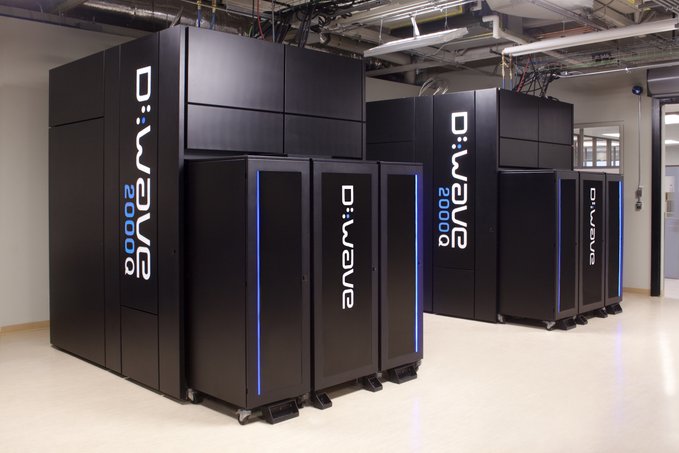
D-Wave Systems’ hardware makes hybrid quantum-classical applications available through its Leap cloud service. (D-Wave Systems Photo)

Burnaby, B.C.-based D-Wave Systems says it’s providing free access to its Leap hybrid quantum cloud service to anyone who’s working on responses to the coronavirus outbreak.

But wait … there’s more: D-Wave’s partners and customers are providing expertise to help researchers use quantum tools to study the virus and how to stop it.

The companies joining the quantum fray alongside D-Wave include Volkswagen, Kyocera, NEC Solution Innovators, Denso, Cineca, Forschungszentrum Jülich, MDR/Cliffhanger, Menten AI, OTI Lumionics, QAR Lab at LMU Munich, Sigma-i and Tohoku University.

Get the full story on GeekWire.

Categories
GeekWire

Researcher pitches a coronavirus doubleheader

An expert on infectious diseases at the University of Washington School of Medicine is involved in not just one, but two studies that are focusing on potential therapies to nip COVID-19 in the bud.

Get the news brief on GeekWire.

Categories
GeekWire

King County says social distancing slows outbreak

South Lake Union
Amazon’s banana stand in Seattle’s South Lake Union district was an early victim of social distancing policies enacted to counter the coronavirus outbreak. (GeekWire Photo / Kurt Schlosser)

Citing fresh statistics, public health officials today confirmed that social distancing measures “appear to be making a difference in slowing the spread of COVID-19” in Seattle and King County.

But in a blog post, they said it’s way too early to put up the “Mission Accomplished” sign. Social distancing measures will likely be required for weeks longer.

The good news and the continuing caveat are based on two new reports from the Bellevue, Wash.-based Institute for Disease Modeling. In one study, the institute worked with state and county public health officials as well as Facebook to analyze anonymized mobility data. Facebook’s data came from its Disease Prevention Maps.

That analysis showed reductions in mobility beginning in early March — an observation that parallels other findings gleaned from navigation and mapping data.

Get the full story on GeekWire.

Categories
GeekWire

Hydroxychloroquine tested to prevent COVID-19

University of Washington researchers are among the leaders of a newly announced clinical trial investigating whether hydroxychloroquine, a drug that’s commonly used to counter malaria and autoimmune disease, can prevent COVID-19.

The multi-site trial, managed by UW in collaboration with New York University’s Grossman School of Medicine, aims to determine definitively whether taking the drug can prevent transmission in people exposed to the virus.

“We currently don’t know if hydroxychloroquine works, but we will learn in as short a timeframe as possible what the outcome is,” principal investigator Ruanne Barnabas, associate professor of global health in the University of Washington Schools of Medicine and Public Health, said today in a news release.

The trial is due to run for eight weeks, with results expected by this summer.

Get the full story on GeekWire.

Categories
GeekWire

Jeff Bezos pledges to help WHO with test kits

WHO director general with Jeff Bezos
WHO Director-General Tedros Adhanom Ghebreyesus conducts a videoconference with Amazon CEO Jeff Bezos. (Courtesy of Jeff Bezos via Instagram)

Amazon CEO Jeff Bezos and the World Health Organization’s director-general are trading ideas on how to get the COVID-19 pandemic under control, using tools ranging from Amazon Web Services’ firepower in cloud computing and artificial intelligence to distribution channels for coronavirus test kits.

Bezos recapped today’s talk with Director-General Tedros Adhanom Ghebreyesus in an Instagram post, featuring a screengrab of Bezos’ videoconference view with the billionaire’s own visage in the upper right corner of the frame.

Get the full story on GeekWire.

Categories
GeekWire

Researchers predict 80,000 COVID-19 deaths

Coronavirus testing station
Nurses wait for the next patient to be screened for coronavirus at a UW Medicine testing station. (UW Medicine Photo / Randy Carnell)

If gaps in health care resources aren’t filled, more than 80,000 Americans will die over the next four months due to the coronavirus pandemic, epidemiologists at the University of Washington predict.

The grim forecast — based on an analysis of statistics from the World Health Organization, as well as from national and local governments and hospitals — is laid out today in a research paper that’s being submitted to the MedRxiv preprint server but hasn’t yet been peer-reviewed.

Researchers at the UW’s Institute for Health Metrics and Evaluation say their forecast takes current policies on social distancing into account. The problem is that shortages of hospital beds and medical supplies are projected to boost the death toll nevertheless.

Get the full story on GeekWire.

Categories
GeekWire

Data mining underscores social distancing’s value

A traffic advisory on Interstate 5 emphasizes the “Stay Home” message. (WSDOT Webcam)

By Alan Boyle and Lisa Stiffler

Masses of location data gathered in China show that intensive testing, tracking and restrictions on mobility are effective strategies for fighting a coronavirus outbreak. They also show that the strategies need time to work.

And although it’s still early, similar evidence suggests that the strategies are working in Seattle as well.

Get the full story on GeekWire.

Categories
GeekWire

UW Medicine sets up tents to cope with COVID-19

UW Medicine is implementing its plan to deal with a surge of patients with COVID-19 respiratory symptoms, including the erection of tents outside hospital emergency departments for initial screening.

The surge plan should be fully in place by April 1, the University of Washington’s medical system said today in a news release. UW Medicine manages four hospitals in the Seattle area, including Harborview Medical Center, Valley Medical Center, UW Medical Center – Montlake and UW Medical Center – Northwest.

Get the full story on GeekWire.