A study involving thousands of COVID-19 patients in Britain suggests that a low-cost steroid drug known as dexamethasone could significantly reduce the death rate for those sick enough to require respiratory support.
 Cosmic Log
A study involving thousands of COVID-19 patients in Britain suggests that a low-cost steroid drug known as dexamethasone could significantly reduce the death rate for those sick enough to require respiratory support.

The latest projections for the course of the coronavirus pandemic in the U.S. suggest that there’s going to be an upswing in the daily death toll, but they differ in how that upswing will develop.
If you go by the University of Washington’s Institute for Health Metrics and Evaluation, whose computer models have been closely watched since the early days of the pandemic, the trend appears likely to stabilize at somewhere between 650 and 750 COVID-related deaths per day nationwide through the start of September. Then the model calls for a steady rise to more than 1,400 daily deaths by October.
The institute’s best guess is that the cumulative U.S. death toll will exceed 200,000 on Oct. 1. The current U.S. death toll, according to Johns Hopkins University’s coronavirus dashboard, is just over 116,000.

The Food and Drug Administration today revoked its emergency authorization for two related antimalarial drugs, chloroquine and hydroxychloroquine, to be used for treating COVID-19.
Citing emerging scientific data, the FDA said that the drugs were “unlikely to be effective in treating COVID-19” and that the potential benefits don’t outweigh the known risks, including the incidence of serious cardiac events. For those reasons, the legal criteria for issuing an emergency use authorization “are no longer met,” the FDA said.

Seattle Mayor Jenny Durkan’s office says it’s seeing no evidence so far that protesters are testing positive for COVID-19 at higher rates than normal after attending protests.
In an online update, mayoral spokesperson Kamaria Hightower wrote that “results are in from UW Medicine, and out of 3,000 tests, fewer than 1% were positive.”
Hightower provided further detail in a follow-up email to GeekWire. “For the free citywide testing results, less than 1% have returned positive,” she wrote. “Individuals are not required to share their history of attending demonstrations; however, a field on the appointment software form does ask your reason for attending, and some have cited their reasoning as having attended a protest.”
For the past two weeks, demonstrators have been gathering in Seattle daily to protest police brutality in the wake of the May 25 killing of George Floyd in Minneapolis. Thousands turned out today for a “March of Silence” from Seattle’s Central District to the Beacon Hill neighborhood.

From the early days of the coronavirus pandemic, genetic sleuths have been at the forefront in the global effort to monitor SARS-CoV-2, the virus that causes COVID-19. By comparing the molecular fingerprints of different virus samples collected in Washington state, they were able to track down the first signs of community spread in the U.S.
In a paper published today by Nature Medicine, some of the pioneers of genomic epidemiology have laid out a 10-point plan for creating a well-supported scientific ecosystem — not only to fight COVID-19, but to head off future pandemics as well.
Seattle-based Adaptive Biotechnologies and Microsoft have launched an open-access database called ImmuneCODE to catalog the many ways in which our immune systems fight off a coronavirus infection.
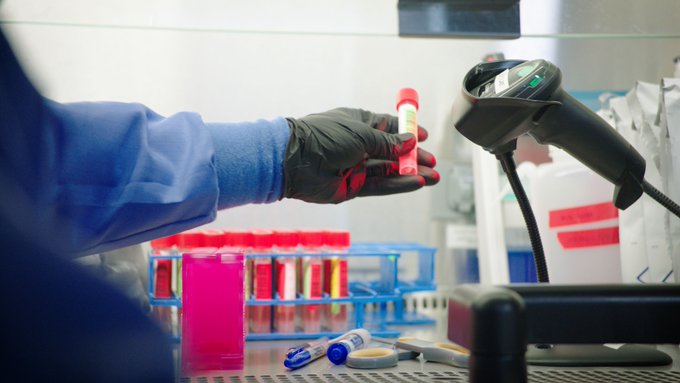
The Seattle Coronavirus Assessment Network today resumed its at-home COVID-19 testing campaign, nearly a month after the program was suspended due to regulatory snags.
Public Health – Seattle & King County announced that the research study could go forward with the approval of an institutional review board and oversight by the University of Washington, Seattle Children’s and the Fred Hutchinson Cancer Center.
“SCAN continues to provide an important and unique window into the COVID-19 outbreak across King County, and in its next phase will also help us expand access to testing for at-risk groups,” Jeff Duchin, health officer for Public Health – Seattle & King County, said in a blog posting. “This data can inform public health decisions in the weeks and months to come as King County takes steps to increase activities and get back to work.”
Winning the review board’s approval cleared up an issue that led SCAN’s organizers to put the project on pause on May 12.

Dueling projections for the course of the COVID-19 pandemic are converging on a narrower range of estimates for this summer, as expected, but the longer-term outlook doesn’t call for coronavirus infections to fade away quickly.

Epidemiologists say the crowding conditions associated with mass protests over police violence seem likely to add dozens of people, or perhaps even hundreds, to the daily death toll from coronavirus infections.
But they acknowledge that that these sorts of assessments involve a tradeoff between public health and social justice.
“Racism and state-sponsored violence are critical public health issues,” Trevor Bedford, a computational biologist at Seattle’s Fred Hutchinson Cancer Research Center, wrote in a weekend string of tweets. “We should also acknowledge that the specific action of large-scale public protest at this moment during the COVID-19 pandemic may result in perhaps more than 10 but less than 100 deaths per day.”
In response to feedback, Bedford later revised his estimate to “a highly speculative” guess of more than 50 but less than 500 extra deaths for each day of protest.
Bedford and other coronavirus trackers pointed out that the protests are coming amid widespread relaxation of strict rules on social distancing and business activities. That will make it all the more difficult to tease out the specific causes behind what’s likely to be an upswing in infections.
“The protests and potential to transmit virus are on a background of general societal opening,” Bedford said. “It feels as though we’ve largely given up on controlling the epidemic and have resigned ourselves to living alongside it.”

A public-private partnership called Operation Warp Speed is aiming to get multiple vaccines approved by the end of the year to protect against COVID-19 — but two veterans of the vaccine development process say there’s a long road ahead, with no wormholes in sight to reduce the travel time.
Anthony Fauci, director of the National Institute of Allergy and Infectious Diseases, said this week that there should be a “couple hundred million doses” of vaccines available by the start of next year.
That’s an ambitious timetable, according to John Mascola, head of NIAID’s Vaccine Research Center; and Larry Corey, a virologist at Seattle’s Fred Hutchinson Cancer Research Center.coron
“I don’t think either John or I are particularly happy with Tony telling everybody that it’s here by January, but if everything goes well, that’s definitely possible,” Corey said today during a webcast presented by Fred Hutch.