Categories
GeekWire

Elon Musk hails Hyperloop and touts tunnel

Hyperloop test track
A pod rolls down an enclosed test track next to SpaceX’s headquarters. (SpaceX Photo)

Three student teams got through the engineering gauntlet and sent their Hyperloop pods through a mile-long tube to test a new mode of transportation today.

The pod races were the climax of this weekend’s first-ever Hyperloop competition – hosted by SpaceX at its headquarters in Hawthorne, Calif., and backed by SpaceX CEO Elon Musk, who came up with the Hyperloop concept in 2013.

Twenty-seven teams, including a squad from the University of Washington, brought their fast-moving, high-tech machines to Hawthorne for testing.

But there was only enough time for three of the teams – coming from the Massachusetts Institute of Technology, Delft University of Technology in the Netherlands and Germany’s Technical University of Munich – to pass all of today’s required preliminaries and make a tube run under full race conditions.

“We completed all tests and were ready to go, as were a few other teams,” David Coven, one of the leaders of the UW Hyperloop team, told GeekWire in an email. “There just wasn’t enough time to race each of the teams.”

The German team, known as WARR Hyperloop, clocked the fastest time of the three, traveling through the vacuum tube at a maximum speed of 94 kilometers per hour (58 mph). Delft won the overall prize, based on the points given for design and safety as well as for speed.

Get the full story on GeekWire.

Categories
GeekWire

UW Hyperloop team unveils purple pod racer

Hyperloop pod racer
The UW Hyperloop team’s sleek pod racer is unveiled at an Eastlake lab building amid the glow of purple spotlights. (GeekWire Photo / Taylor Soper)

The University of Washington’s Hyperloop team showed off its sleek pod racer and let fans take a peek under the carbon composite hood, one week before a national competition in California.

For the team’s roughly 35 students, the Jan. 19 unveiling at the GloCal Composites Lab in Seattle’s Eastlake neighborhood was an opportunity to celebrate the purple-tinted fruits of their labor.

“Everyone is committed to being a part of something bigger than themselves, grander than the team itself, and ultimately as a part of history as we think about the next mode of transportation,” UW engineering student David Coven, one of the team’s leaders, told the gathering of students and faculty, guests and journalists.

In its grandest form, the Hyperloop concept calls for shooting passenger pods through tubes at near-supersonic speeds. SpaceX founder Elon Musk came up with the idea in 2013 as a means of traveling between San Francisco and Los Angeles in about a half-hour.

Musk is leaving the commercialization of the concept to others, but in the meantime, SpaceX is sponsoring a college competition for scaled-down models of the pods. Coven said he and other students at UW jumped at the opportunity.

“We couldn’t help ourselves,” he said.

Get the full story on GeekWire.

Categories
GeekWire

Crowdfunding fuels UW Hyperloop’s final dash

UW Hyperloop team
Members of UW’s Hyperloop team are ready for the pod races. On the left side of the pod track, from front to back, are David Coven, CJ Grijalva, Max Pfeiffer and Jasdip Singh. On the right, from front to back: Ted Coleman, Luke Marcoe, Nicole Lambert and Isaac Perrin. (UWashington Hyperloop Photo)

The University of Washington’s Hyperloop team is getting ready to compete in a set of pod races aimed at blazing a trail for a new means of near-supersonic travel – but they need a little help to get to the starting line in California.

This week, team members kicked off a crowdfunding campaign on UW’s Useed online platform to raise $20,000 for their quest.

“it’s paramount for our current and future success,” Luke Marcoe, the team’s marketing and public relations lead, told GeekWire in an email.

The campaign already has gotten into high gear: More than $10,000 was raised on the first day, thanks to contributions from just two donors.

Get the full story on GeekWire.

Categories
GeekWire

Elon Musk says he’s serious about tunnels

Bertha boring machine
The Bertha tunneling machine’s passage has been anything but boring. (WSDOT Photo via Flickr)

Elon Musk, the billionaire CEO of Tesla Motors and SpaceX, insists he’s really going to build a tunnel-boring machine to do something about road traffic. But should he?

Never say never when it comes to Musk doing something about the things that bug him. He founded SpaceX, a company that’s revolutionizing the rocket business, when he couldn’t find a cheap ride for a mission to Mars.

Three years ago, he came up with the Hyperloop concept for near-supersonic land travel out of frustration with California’s costly plan for a rapid-transit system that’s not that rapid.

Now it’s tunnels.

Get the full story on GeekWire.

Categories
GeekWire

Hyperloop One gets a $50 million boost

Hyperloop One terminal
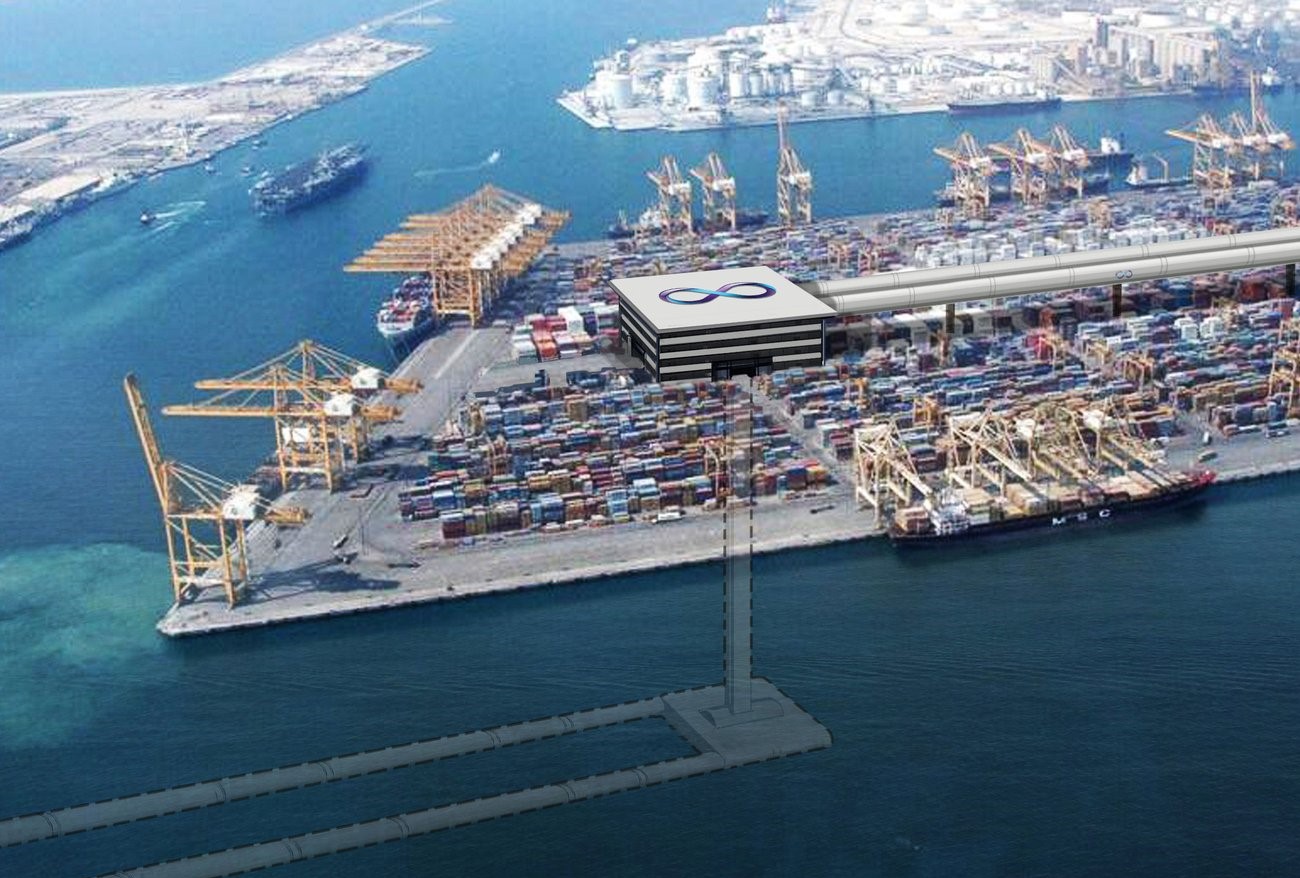
An artist’s conception shows how a Hyperloop One terminal could be built at a Dubai port facility with subsurface transit tubes. (Credit: DP World / Hyperloop One)

Hyperloop One, an L.A.-based venture that wants to commercialize Elon Musk’s rapid-transit concept, says it has received $50 million in a financing round led by Dubai-based port operator DP World Group.

In a news release, Hyperloop One said the latest round brings its total financing to $160 million.

The announcement serves as another signal that cargo transport is likely to be one of the first applications for Hyperloop One’s near-supersonic, tube-running pods. DP World recently signed an agreement with Hyperloop One to look into building a system that would move containers from Dubai’s Port of Jebel Ali to a new inland depot.

Get the full story on GeekWire.

Categories
GeekWire

Hyperloop One zooms through speed test

Image: Hyperloop One sled
Hyperloop One’s propulsion test sled zooms down a Nevada desert track. (Credit: Hyperloop One)

The newly renamed Hyperloop One venture sent an electrically propelled sled down a Nevada test track at speeds that went beyond 100 mph in just two seconds, marking the public debut of its rapid-transit propulsion system.

Hundreds of journalists and VIPs watched the open-air propulsion test, which represents a milestone in the effort to commercialize a high-speed transportation system conceived three years ago by Elon Musk, the billionaire CEO of SpaceX and Tesla Motors.

Theoretically, such a system could transport passengers in levitating pods through elevated tubes at near-supersonic speeds, bridging the distance between, say, San Francisco and Los Angeles in a half-hour.

But turning theory into fact will probably require spending billions of dollars, pioneering scores of technologies and negotiating unprecedented regulatory hurdles. Today’s test was meant to demonstrate first-generation Hyperloop technology, and show that Hyperloop One was serious about building hardware and laying track, albeit for scaled-down testing.

Hyperloop One already has raised more than $100 million for its venture, including$80 million in investments that were announced on May 10.

Get the full story on GeekWire.

Categories
GeekWire

Hyperloop One gets an $80 million boost

Image: Hyperloop One test track
Components for a Hyperloop One test track are laid out in North Las Vegas. (Credit: Hyperloop One)

Forget Hyperloop Technologies: Now the company is called Hyperloop One, and it’s backed by $80 million in new investment from heavy hitters including Khosla Ventures, GE Ventures and the French high-speed rail company SNCF.

Today’s unveiling of the new name and new financing, as well as an international array of partners and a tuned-up business plan, is part of a fast-track plan for building high-speed tube transit systems – not only in California, but potentially in Scandinavia and Switzerland as well.

L.A.-based Hyperloop One is due to demonstrate its propulsion system on an open-air test track in North Las Vegas on Wednesday. It’s gearing up for full-scale trials in a 2-mile-long tube by the end of the year. It’s also planning a “Hyperloop One Global Challenge” for folks who want to propose transportation applications for the Hyperloop concept. (Deadline for entries is Sept. 15.)

This week’s revelations pick up the pace in a crowded commercial race, aimed at capitalizing on a rapid-transit concept laid out almost three years ago by Elon Musk, the billionaire entrepreneur behind SpaceX and Tesla Motors.

Get the full story on GeekWire.

Categories
GeekWire

Commercial Hyperloop race heats up

Image: Hyperloop Trans concept
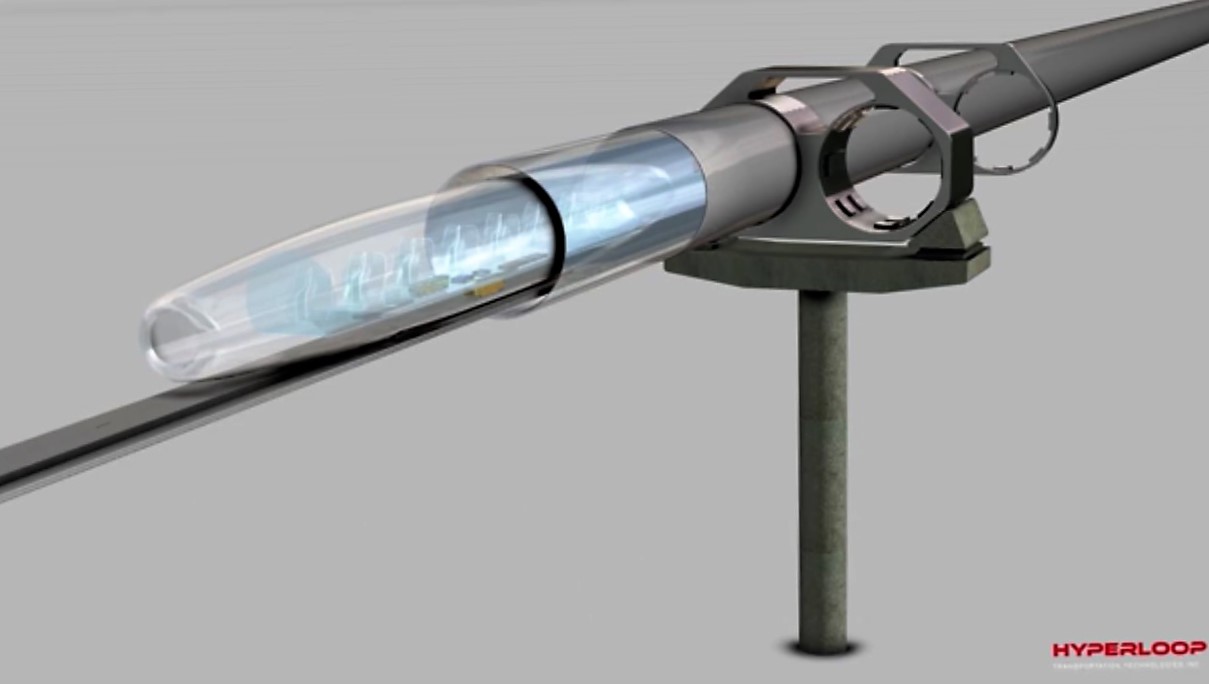
A cutaway shows Hyperloop Transportaion’s concept for a passenger pod supported by passive magnetic levitation. (Credit: Hyperloop Trans)

This is a big week for the Hyperloop, a high-speed transportation concept that waslaid out three years ago by Elon Musk, the tech mastermind behind SpaceX and Tesla: One California-based startup is talking about the magnetic levitation system it plans to use for its prototype, while another will be showing off its test track in North Las Vegas.

Neither company is associated with Musk, but both are hoping to capitalize on his concept. If such systems are built, passengers will be able to board levitating pods and zoom through tubes from the San Francisco Bay Area to Los Angeles in about a half an hour, at nearly supersonic speeds. The cost of building such systems is expected to amount to billions of dollars. That suggests only one company will win out.

Today, Hyperloop Transportation Technologies announced that it was licensing a system known as passive magnetic levitation or Inductrack to get its pods off the ground. The system was developed by the late Richard Post and fellow researchers at Lawrence Livermore National Labs.

Get the full story on GeekWire.

Categories
GeekWire

Elon Musk wows students at Hyperloop contest

Image: Elon Musk
Elon Musk, the originator of the Hyperloop concept, addresses students. (Texas A&M photo)

The Massachusetts Institute of Technology won the top rating in the design phase of a SpaceX-sponsored contest to develop levitating cars for a Hyperloop rapid-transit test track. More than 20 other teams, including a student group from the University of Washington, were also cleared for this year’s big race.

The design weekend, conducted at Texas A&M University, marked the first winnowing of the field for the competition. More than 115 student engineering teams, representing 27 U.S. states and 20 countries, participated in the event.

The highlights included a talk by Transportation Secretary Anthony Foxx – and a surprise appearance by Elon Musk, the billionaire who heads SpaceX as well as the Tesla electric-car company.

Get the full story on GeekWire.

Categories
GeekWire

Hoverboard company sells Hyperloop tech

Image: Arx Pax Hyperloop pods
These concepts show what Hyperloop pods powered by Arx Pax’s Hover Engine might look like. The pods could be optimized to carry cargo or passengers. (Credit: Arx Pax)

The company that brought you a real-life hoverboard from “Back in the Future” wants to levitate you in the Hyperloop as well.

Arx Pax, the Silicon Valley company behind the Hendo Hoverboard, says it’s marketing its patented “Hover Engine” to commercial ventures that are trying to turn SpaceX founder Elon Musk’s rapid transit concept into a reality.

The company’s Magnetic Field Architecture technology also will be in the spotlight at the end of this month during the Hyperloop Competition Design Weekend at Texas A&M University. The event is one of the milestones on the way to this year’s Hyperloop pod races, which will be conducted on a 1-mile test track built next to SpaceX’s headquarters in Hawthorne, Calif.

Arx Pax says it’s received inquiries from more than half of the 126 teams taking part in the competition about its Hyperloop Developer Kit, or HDK, and has already made some sales. The kit goes for $1,289.

Get the full story on GeekWire.