Categories
GeekWire

Kymeta’s pizza-box antennas pass tests at sea

Antenna replacement
An artist’s concept shows the bridge of the White Rose of Drachs before and after installation of Kymeta’s antennas. The antenna visible in the right image replaces the antenna domes visible in the left image. (Kymeta / e3 Illustration)

Kymeta Corp. — a company based in Redmond, Wash. and backed by Microsoft co-founder Bill Gates — says it’s conducted successful sea trials of its streamlined antenna system for broadband communications.

The trials were performed over the past several months in the Mediterranean Sea on a super-yacht known as the White Rose of Drachs, in cooperation with Kymeta’s Spain-based distribution partner, e3 Systems.

Word of the trials emerged today during the buildup to the Monaco Yacht Show, scheduled Sept. 27-30.
Get the full story on GeekWire.

Categories
GeekWire

Kymeta wins FCC’s OK for pizza-box antennas

Kymeta RAV4 SUV
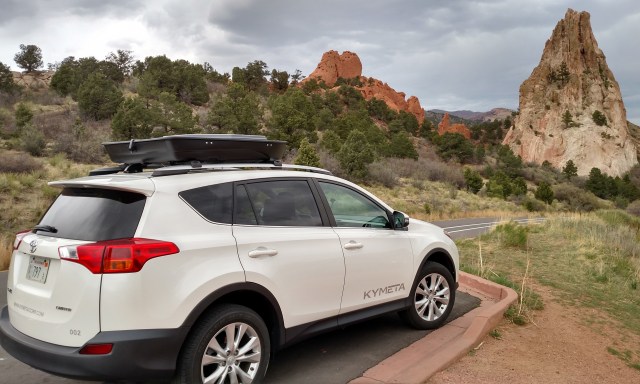
During an 8,000-mile test drive known as “Kytrek 2,” Kymeta demonstrated how its KyWay terminal could provide coast-to-coast satellite connectivity for a Toyota RAV4 SUV. (Kymeta Photo)

Kymeta Corp., the flat-panel antenna startup backed by Microsoft co-founder Bill Gates, has won key approvals from the Federal Communications Commission and its British counterpart for thousands of satellite antennas and the terminals to go with them.

Until now, the company has been providing its mTenna antennas and KyWay data terminals under the terms of special, temporary or experimental licenses, said Carl Novello, vice president of solutions for the Redmond, Wash.-based company.

“This is the big one that says, ‘Yup, you’re well on your way to commercialization,’” he told GeekWire today.

The FCC issued the blanket license on Aug. 24, authorizing 5,000 terminals for land mobile applications, 1,000 for maritime applications and 5,000 for fixed satellite service.

Get the full story on GeekWire.

Categories
GeekWire

Kymeta picks e3 to distribute yacht antennas

Redmond, Wash.-based Kymeta says a Spanish company known as e3 Systems will be its exclusive global distribution partner for flat-panel satellite antennas designed for the yacht market. Sea trials of the antennas began on superyachts last month and will continue over the summer on both sailing vessels and motor yachts. In a statement, Håkan Olsson, Kymeta’s vice president for maritime, said “the commitment and insight that e3 has provided over the last three and a half years has been very valuable to Kymeta.”

Get the news brief on GeekWire.

Categories
GeekWire

NASA backs mini-antennas and 3-D printer

Cubesats
Nanosatellites tumble through space after their deployment from the International Space Station. Kymeta is working on flat-panel communication antennas that could be placed on such satellites. (NASA Photo)

Flat-panel antennas that are tiny enough to fit on a nanosatellite and a 3-D printer that can recycle space station trash are among the Seattle-area projects that have won seed money in NASA’s latest round of grant-making.

They’re just a couple of the 133 proposals selected for contracts of up to $750,000 under NASA’s Small Business Innovation Research program, or SBIR. But what’s notable about Kymeta’s mini-antennas and Tethers Unlimited Inc.’s ERASMUS plastics recycler and 3-D printer is that they could spawn products for use on Earth as well as in space.

Get the full story on GeekWire.

Categories
GeekWire

‘Coming-out party’ for Kymeta’s antennas

Kymeta antenna
Kymeta’s mTenna antenna system can bring turnkey satellite connectivity to buses, trains and remote sites where cellphones can’t get a signal. (Kymeta via YouTube)

WASHINGTON, D.C. – Five years after its founding, the Kymeta antenna venture backed by Microsoft co-founder Bill Gates is releasing its first commercial product – and partnering with satellite operator Intelsat on a new broadband data service dubbed Kalo.

Kalo (rhymes with “halo”) and Kymeta’s integrated antenna and data terminal system made their debut today at the Satellite 2017 conference in Washington, D.C.

“Anything you could do on a cellphone, you can now do with a satellite,” Bill Marks, chief commercial officer for Kymeta, headquartered in Redmond, Wash., told GeekWire.

Get the full story on GeekWire.

Categories
GeekWire

Kymeta’s antennas wow Monaco’s yacht crowd

Kymeta antenna
Kymeta’s flat-panel antennas have their day in the sun at the Monaco Yacht Show. (Credit: Kymeta)

Kymeta Corp., the flat-panel antenna company that’s backed by Microsoft co-founder Bill Gates, has demonstrated the capabilities of its satellite broadband data transmission technology in front of a tough crowd: the rich and famous at the Monaco Yacht Show.

“This is really about us showing our first product in action,” said Nathan Kundtz, president and CEO of the venture headquartered in Redmond, Wash.

Kymeta makes stop-sign-sized antennas that take advantage of metamaterials to receive satellite signals without having to turn and focus on the spacecraft flying overhead.

During the week surrounding the show in Monaco show, which ran from Sept. 28 to Oct. 1, Kymeta set up two of its antennas on the roof of the stylish Restaurant Virageto provide Wi-Fi access for the Superyacht Owner’s VIP Lounge.

Get the full story on GeekWire.

Categories
GeekWire

Toyota, Kymeta work on satellite connected car

Image: Mirai vehicle
Toyota’s Mirai fuel-cell vehicle is equipped with Kymeta’s satellite antenna system. (Credit: Kymeta)

Redmond-based Kymeta Corp. and Toyota took the wraps off their collaboration on a satellite antenna system that can send data to cars at broadband speeds.

Toyota’s antenna-equipped, hydrogen-powered Mirai fuel-cell vehicle was unveiled today at the North American International Auto Show in Detroit. The prototype communication system can download satellite data at 50 megabits per second, which is better than typical LTE wireless service. The transmission speed is expected to rise past the gigabit-per-second mark within a few years.

Kymeta said Mirai Creation Investment Limited Partnership, a Japan-based fund in which Toyota participates, is providing a strategic investment to push the initiative along. The company declined to specify how much is being invested, other than to say that the amount is significant. On Monday, Kymeta said it closed a $62 million investment round that includes money from Mirai.

For now, the satellite antenna system is being installed on Mirai research vehicles, but not on cars being sold to customers. Kymeta President and CEO Nathan Kundtz said that status is likely to change within the next couple of years.

Get the full story from GeekWire.

Categories
GeekWire

Kymeta satellite venture gets a $62M boost

Image: Kymeta antenna
Kymeta’s flat-panel antenna picks up signals from a wide spectrum of satellites. (Credit: Kymeta)

Kymeta Corp., the Redmond-based satellite antenna venture backed by Microsoft founder Bill Gates, says it has closed a $62 million Series D financing round to support a host of new initiatives by land, air and sea.

“With new partnerships, rollout of its smart antenna, customer milestones ahead and growing industry buzz, Kymeta is inventing and delivering a future I can’t wait to live in,” Josh Wolfe, a board member and investor at Lux Capital, said in Monday’s press release announcing the capital influx.

In addition to Lux and Gates, the latest round’s funders include the Kresge Foundation and Osage University Partners, which have invested in Kymeta previously. There are also investments from “as of yet undisclosed strategic partners,” Kymeta said.

Get the full story on GeekWire.

Categories
GeekWire

Satellite antennas are getting more shipshape


Image: Maritime antenna
Kymeta’s antenna can provide a communication link for maritime vessels. (Credit: Kymeta)

Redmond-based Kymeta Corp. and Panasonic Avionics Corp. are setting sail on a new partnership to put Kymeta’s lightweight, flat-panel antennas on ships.

Today the companies said Panasonic will order a “significant volume” of the antennas, and also use Kymeta’s mTenna technology in maritime terminals that can be used on vessels around the world. The satellite communication system is due to go through testing this year and become commercially available in 2017.

Kymeta’s notable not only for its innovative metamaterials technology, but also for its lead investor: Microsoft co-founder Bill Gates. Over the past few years, the company has built up collaborations with the usual satellite suspects (Inmarsat and Intelsat) plus some not-so-usual suspects (Airbus and Toyota).

For Kymeta, the key technology is an LCD-laden panel that’s the size and shape of a stop sign, but has as much capacity for broadband communications as the big dome-shaped antennas typically seen on cruise ships.

Get the full story on GeekWire.