Categories
GeekWire

SpaceX launches NASA’s planet-hunting TESS probe

SpaceX Falcon 9 launch
SpaceX’s Falcon 9 rocket lofts NASA’s TESS probe into space. (NASA via YouTube)

SpaceX has launched NASA’s Transiting Exoplanet Survey Satellite, or TESS, kicking off a mission aimed at surveying nearly the entire sky for exoplanets.

The probe rose into space atop a SpaceX Falcon 9 rocket, sent up from Cape Canaveral Air Force Station in Florida at 6:51 p.m. ET (3:51 p.m. PT) today.

TESS was supposed to take off on April 16, but the launch teams said they wanted more time for guidance, navigation and control analysis. No issues were reported this time around.

Minutes after launch, SpaceX landed the Falcon 9’s first-stage booster on an autonomous drone ship named “Of Course I Still Love You,” hundreds of miles out in the Atlantic. Over the past two years, such landings have become routine.

Get the full story on GeekWire.

Categories
GeekWire

SpaceX, NASA delay planet-hunting probe’s liftoff

SpaceX Falcon 9
SpaceX’s Falcon 9 sits on its launch pad. (SpaceX via YouTube)

NASA and SpaceX say they’ll take more time to launch the Transiting Exoplanet Survey System, or TESS, just to make sure the $337 million mission will be on the right track to hunt for planets beyond our solar system.

TESS’ liftoff aboard a SpaceX Falcon 9 rocket had been scheduled for today, but in an online update, NASA said “launch teams are standing down today to conduct additional guidance, navigation and control analysis.”

The launch was retargeted for April 18, with an anticipated liftoff time of 6:51 p.m. ET (3:51 p.m. PT).

Get the full story on GeekWire.

Categories
GeekWire

How scientists are expanding the SETI spectrum

Habitable planet map
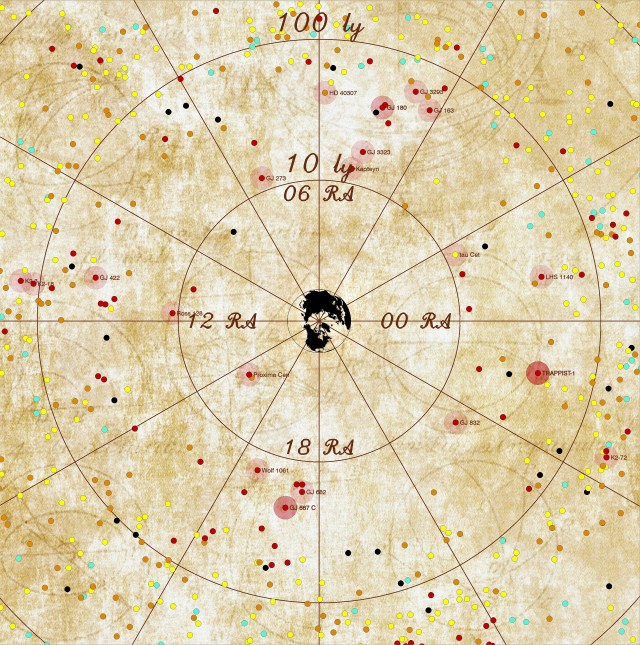
This map from the University of Puerto Rico’s Planetary Habitability Laboratory shows the known planetary systems within about 100 light-years from Earth, plotted on a logarithmic scale. The systems with potentially habitable exoplanets are highlighted with red circles. (PHL @ UPR Arecibo)

BERKELEY, Calif. — Twenty years after the movie “Contact” brought the search for extraterrestrial intelligence, or SETI, to the big screen, it’s dawning on astronomers that the real-world plotline might turn out to be totally different 20 years from now.

So far, SETI has been dominated by radio telescope surveys looking for anomalous patterns that may point to alien transmissions. But SETI’s practitioners are realizing that E.T. may make its presence known in other ways.

Over the next 20 years, or 200 years, SETI may come to stand for sensing extraterrestrial irregularities, ranging from unusual atmospheric chemistry to higher-than-expected thermal emissions. The telltale signs of life beyond our solar system may even be associated with phenomena we haven’t yet come across.

Get the full story on GeekWire.

Categories
GeekWire

Messages and music beamed to alien super-Earth

Beaming signals to GJ273 b
The target of the “Sonar Calling” binary-coded radio transmission is a planet known as GJ273 b. (METI International Illustration / Danielle Futselaar)

Scientists and artists have banded together to beam coded radio transmissions toward a star that has a potentially habitable planet, just 12.4 light-years from Earth.

“Sónar Calling GJ273b” is the latest effort to communicate with aliens, 43 years since the first attempt was made using the 1,000-foot Arecibo radio telescope in Puerto Rico.

The “Sónar Calling” messages were sent on three successive days, Oct. 16-18, from the 32-meter EISCAT radio antenna in Tromsø, Norway, just inside the Arctic Circle. Each transmission was directed at peak power of 2 megawatts toward a red dwarf star known as GJ273, or Luyten’s Star, in the constellation Canis Major.

Astronomers say Luyten’s Star harbors a planet that’s more than twice as massive as Earth, in an orbit where water could conceivably exist in liquid form. “Sónar Calling” aims to communicate with any radio-savvy life forms on that planet, called GJ273 b.

Get the full story on GeekWire.

Categories
GeekWire

Red dwarf sparks interest as potential locale for life

Ross 128 b
This artist’s impression shows the temperate planet Ross 128 b, with its red dwarf parent star in the background. (ESO Illustration)

A red dwarf star that was previously thought to be the source of a weird signal from aliens turns out to have a temperate Earth-sized planet, astronomers reported today.

The “Weird! Signal,” detected this summer, turned out to be nothing more than earthly interference. In contrast, the planet known Ross 128 b is very real, and it’s only 11 light-years away.

That makes it the second-closest exoplanet thought to have temperate conditions. What’s more, the planet orbits a star that’s less active than the closer-in planet, Proxima Centauri b, which could make Ross 128 b a better bet for life’s presence.

Get the full story on GeekWire.

Categories
GeekWire

Billionaire wants to look for life on Enceladus

Oliver Morton and Yuri Milner
Russian billionaire Yuri Milner, at right, chats with The Economist’s Oliver Morton during the “New Space Age” conference at Seattle’s Museum of Flight. (GeekWire Photo / Alan Boyle)

Russian billionaire Yuri Milner today laid out his vision to send the first privately funded interplanetary space mission to look for life at the Saturnian moon Enceladus — but first he had to address less lofty matters.

Milner has been in the news for the past week because newly published confidential documents known as the “Paradise Papers” revealed that two firms controlled by the Russian government backed his early investments in Facebook and Twitter.

So, of course, that was the first topic Milner was asked about during an onstage fireside chat at The Economist’s “New Space Age” conference at the Museum of Flight in Seattle.

Get the full text on GeekWire.

Categories
GeekWire

Dust suggests Proxima Centauri b isn’t alone

Dust belt at Proxima
An artist’s impression shows the newly discovered belts of dust around Proxima Centauri, the closest star to our solar system. This sketch is not to scale — to make Proxima b clearly visible, it has been shown farther from the star and larger than it is in reality. (ESO Illustration / M. Kornmesser)

Astronomers created a stir last year when they reported that the closest star beyond our own solar system harbors a potentially habitable planet, but now fresh evidence hints that there could be even more worlds around Proxima Centauri.

The ALMA Observatory’s array of antennas in Chile has picked up the thermal glow from cold clouds of dust surrounding the red dwarf star, which lies just 4.2 light-years away in the constellation Centaurus. The clouds show up in a region that’s about one to four times as far away from the star as Earth is from our own sun.

There’s also evidence of a second dust belt farther out from the star. Such belts are thought to contain the remains of material left behind by the planet formation process, consisting of particles ranging in size from flecks of earthly dust to miles-wide asteroids.

Both belts are farther out than Proxima Centauri b, the planet whose detection was announced last year.

Get the full story on GeekWire.

Categories
GeekWire

VR takes you on a trip to Mars and other worlds

Mars rover in VR
“Access Mars” provides 3-D views of the Red Planet as captured by NASA’s Curiosity rover. (NASA / JPL Illustration)

NASA has been offering virtual-reality tours of Mars for years — but now, with Google’s help, the space agency has come up with one of the most accessible tours yet.

“Access Mars” lays out a 3-D terrain for five of the spots scanned by NASA’s Curiosity rover, ranging from its landing site to the place where it’s hanging out now, more than five years later.

Get the full story on GeekWire.

Categories
GeekWire

Project Blue revives its planet quest

Project Blue telescope
An artist’s concept shows a preliminary design for the Project Blue telescope. (Project Blue via Vimeo)

Project Blue is launching a second try to attract crowdfunding for a space telescope designed to study planets in the Alpha Centauri system, months after the first try fizzled.

This time around, the BoldlyGo Institute and its Project Blue partners – including the SETI Institute, the University of Massachusetts at Lowell, and Mission Centaur – are aiming to raise a minimum of $175,000 through the Indiegogo crowdfunding website.

Whatever money they raise will go toward nailing down the requirements for the Project Blue mission and engaging with potential industry partners.

The mission’s objective is to look for potentially habitable planets around the Alpha Centauri double-star system.

Get the full story on GeekWire.

Categories
GeekWire

Hubble keeps hope alive for alien oceans

Red dwarf planet
This artist’s impression shows how the surface of a planet orbiting a red dwarf star may appear. The planet is in the habitable zone, so liquid water exists. (CFA Illustration / M. Weiss)

Do some of the Earth-sized planets around a dwarf star called TRAPPIST-1, just 40 light-years away, have liquid water? Newly reported findings from the Hubble Space Telescope give astrobiologists continued cause for hope.

The seven TRAPPIST-1 planets created a sensation in February because they’re the biggest assemblage of Earth-scale worlds known to exist in a single planetary system. What’s more, three of the planets – known by the letters e, f and g – are in an orbital region where scientists say water could exist in liquid form.

That’s thought to be a key condition for life as we know it, which is why the region is known as TRAPPIST-1’s “habitable zone.”

But is the water really there? To get at that question, astronomers used Hubble to study the amount of ultraviolet radiation received by the planets, and what that might be doing to their atmospheres.

Get the full story on GeekWire.