
XPRIZE’s latest program to incentivize innovation is going after a new demographic: young people between the ages of 10 and 18 who are up for developing video games that play on the themes of exploration, the environment and social equity.
 Cosmic Log
XPRIZE’s latest program to incentivize innovation is going after a new demographic: young people between the ages of 10 and 18 who are up for developing video games that play on the themes of exploration, the environment and social equity.

Seventy-seven teams from 19 countries around the globe have qualified to participate in the $10 million ANA Avatar XPRIZE competition, which aims to promote the development of robotic systems that let travelers connect with far-flung locales virtually.
The roster of competitors includes 27 teams from the United States, ranging from Boston University’s Robotics and Ambient Intelligence Labs to Virtual Vegas.
There are teams from international robotic hot spots such as Japan and South Korea as well as from emerging tech frontiers such as Brazil and Jordan.
“The incredible geographical diversity represented by the 77 teams moving forward will provide the unique perspectives necessary to develop transformative avatar technology capable of transcending physical limitations and expanding the capacity of humankind itself,” David Locke, prize director at the Los Angeles-based XPRIZE founation, said today in a news release.
With Japan’s All Nippon Airways as the title sponsor, the ANA Avatar XPRIZE will challenge teams to come up with physical, non-autonomous robotic avatar systems that enable a human operator to see, hear and interact with a remote environment in real time.

Two educational companies shared the $10 million top award in the Global Learning XPRIZE, a contest backed by Elon Musk, the billionaire CEO of SpaceX and Tesla.
Musk provided a total of $15 million in prize money for the project, which is designed to boost open-source educational software. The $10 million grand prize was shared by KitKit School and Onebillion.
The two teams and three other finalists each received $1 million in 2017 to develop their projects.

In 2004, Iranian-American entrepreneur Anousheh Ansari helped fund the $10 million Ansari X Prize for private spaceflight. In 2006, she traveled to the International Space Station, becoming the first Muslim woman to go into orbit. Now she’s playing a leading role in the XPRIZE saga once again as the California-based foundation’s CEO.
Ansari’s ascension to executive leadership was announced today during the annual XPRIZE Visioneering Summit in Los Angeles, where 10 teams are vying for a chance to have their ideas turned into multimillion-dollar technological challenges.
“As I take on the helm at XPRIZE, I feel the same exhilaration as I did the day I was sitting in my capsule atop of my Russian Soyuz rocket – waiting impatiently to be launched into the infinity of the universe that I had dreamed about as a child, and in nervous anticipation of the enormous possibilities in front of me,” Ansari, 52, said in a news release.
Ansari takes over from XPRIZE co-founder Peter Diamandis, who’ll continue in his role as executive chairman.

Students representing the Global Innovation Exchange are nearing the finish line in a competition to create wearable sensors that can send wireless alerts in threatening situations — even if the person wearing the sensor is bound and gagged.
The $1 million Naveen & Anu Jain Women’s Safety XPRIZE — backed by Seattle-area entrepreneur Naveen Jain and his wife, Anu Jain — focuses on the issues of sexual harassment and violence against women.

All Nippon Airways is sponsoring a $10 million, four-year competition to spur the development of real-life avatars that could provide telepresence over a span of dozens of miles.
Registration opens today for the ANA Avatar XPRIZE, with XPRIZE founder and executive chairman Peter Diamandis presiding over a high-profile kickoff at the South by Southwest conference in Austin, Texas.
In a news release, Diamandis explained that our ability to experience faraway locales, or provide on-the-ground assistance where needed, is typically limited by cost and time constraints.
“The ANA Avatar XPRIZE can enable creation of an audacious alternative that could bypass these limitations, allowing us to more rapidly and efficiently distribute skill and hands-on expertise to distant geographic locations where they are needed, bridging the gap between distance, time and cultures,” he said.

The organizers for the $30 million Google Lunar X Prize competition acknowledged today that the award for a commercially funded lunar landing will go unwon, despite a decade’s worth of work.
But the California-based XPRIZE foundation’s top executives said they were looking for ways to keep a spotlight on the contest, even after Google’s prize money goes away on March 31.
“This may include finding a new title sponsor to provide a prize purse following in the footsteps of Google’s generosity, or continuing the Lunar XPRIZE as a non-cash competition where we will follow and promote the teams and help celebrate their achievements,” executive chairman Peter Diamandis and CEO Marcus Shingles said in their statement.

Who’s going to the moon? The prospects are looking dimmer for any commercial lunar landings in the short term — but Amazon billionaire Jeff Bezos’ Blue Origin space venture today used a milestone in space history to spotlight its longer-term lunar aspirations.
The bad news is that none of the remaining five contenders for the Google Lunar X Prize is likely to get to the moon in time to win a $20 million award in March.
Google has repeatedly extended the deadline for doing a lunar landing, but CNBC quoted the company as saying there’d be no more extensions beyond March 31.

Imagine you’re a passenger on a jet that mysteriously time warps to the year 2037: That’s what a team of world-class science-fiction writers did for “Seat 14C,” a project created by XPRIZE and Japan’s ANA airline.
Now you can imagine as well, and your tale may well earn you a trip to Tokyo for two.
But wait … there’s more: The winner of the “Seat 14C” contest also earns an honorary seat on the XPRIZE Science Fiction Advisory Council, alongside such greats as Margaret Atwood (“The Handmaid’s Tale), Paolo Bacigalupi (“The Windup Girl”) and Seattle author Nancy Kress (“Beggars in Spain”).
Those writers are among the more than two dozen contributors to the online “Seat 14C” short-story anthology, all focused on technological visions for 2037.
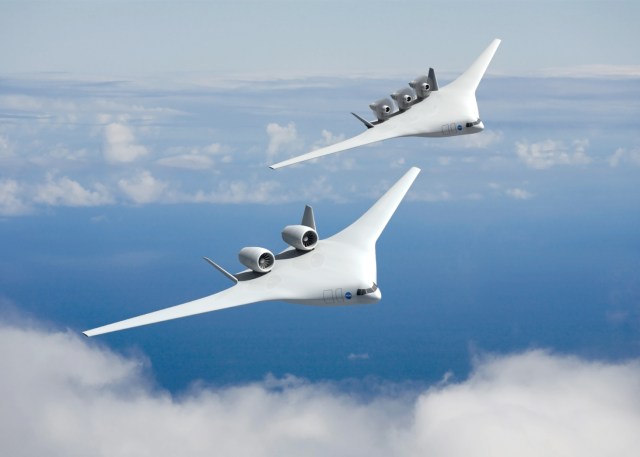
The non-profit XPRIZE foundation has recruited an all-star lineup of science fiction masters, including Seattle authors, to help create a series of fictional “road maps” for future innovations – and the first project, focusing on air travel, is already waiting in the wings.
Sixty-four creative types from nine countries around the world – including writers, directors and producers – have joined the XPRIZE Science Fiction Advisory Council.
Marquee names include Canadian novelist Margaret Atwood, author of “The Handmaid’s Tale”; Andy Weir, who wrote “The Martian” and the upcoming “Artemis” novel about lunar settlement; and Darren Aronofsky, the director of “Pi,” “The Fountain” and “Black Swan.”
At least a half-dozen of the advisers live in the Seattle area.