SpaceX provided details about the expected capabilities of its fully reusable Starship super-heavy-lift launch system in a payload users guide that was issued online today.
 Cosmic Log
SpaceX provided details about the expected capabilities of its fully reusable Starship super-heavy-lift launch system in a payload users guide that was issued online today.

The first non-American to be added to the crew for a SpaceX Dragon flight to the International Space Station is Japanese astronaut Soichi Noguchi.

To cope with the global coronavirus outbreak, Microsoft is bringing out the bots — and that’s just the beginning.
Software developers are also working on software tools to trace the people who came into contact with COVID-19 patients before they knew they were sick, to work through the molecular modeling for new vaccines and therapies, and to simulate how different responses change the course of an outbreak.
The pandemic calls for all the tools that tech companies can muster, said Desney Tan, who is managing director of Microsoft Healthcare as well as chief technologist at IntuitiveX, a Seattle-based life sciences consulting firm.
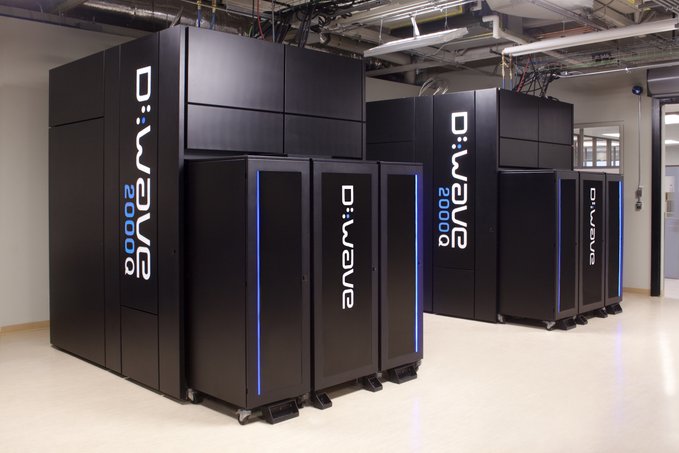
Burnaby, B.C.-based D-Wave Systems says it’s providing free access to its Leap hybrid quantum cloud service to anyone who’s working on responses to the coronavirus outbreak.
But wait … there’s more: D-Wave’s partners and customers are providing expertise to help researchers use quantum tools to study the virus and how to stop it.
The companies joining the quantum fray alongside D-Wave include Volkswagen, Kyocera, NEC Solution Innovators, Denso, Cineca, Forschungszentrum Jülich, MDR/Cliffhanger, Menten AI, OTI Lumionics, QAR Lab at LMU Munich, Sigma-i and Tohoku University.

The U.S. Navy has awarded Boeing a $1.5 billion production contract for the next 18 P-8A Poseidon maritime patrol aircraft, buoying the company’s defense business.
An expert on infectious diseases at the University of Washington School of Medicine is involved in not just one, but two studies that are focusing on potential therapies to nip COVID-19 in the bud.

Citing fresh statistics, public health officials today confirmed that social distancing measures “appear to be making a difference in slowing the spread of COVID-19” in Seattle and King County.
But in a blog post, they said it’s way too early to put up the “Mission Accomplished” sign. Social distancing measures will likely be required for weeks longer.
The good news and the continuing caveat are based on two new reports from the Bellevue, Wash.-based Institute for Disease Modeling. In one study, the institute worked with state and county public health officials as well as Facebook to analyze anonymized mobility data. Facebook’s data came from its Disease Prevention Maps.
That analysis showed reductions in mobility beginning in early March — an observation that parallels other findings gleaned from navigation and mapping data.
University of Washington researchers are among the leaders of a newly announced clinical trial investigating whether hydroxychloroquine, a drug that’s commonly used to counter malaria and autoimmune disease, can prevent COVID-19.
The multi-site trial, managed by UW in collaboration with New York University’s Grossman School of Medicine, aims to determine definitively whether taking the drug can prevent transmission in people exposed to the virus.
“We currently don’t know if hydroxychloroquine works, but we will learn in as short a timeframe as possible what the outcome is,” principal investigator Ruanne Barnabas, associate professor of global health in the University of Washington Schools of Medicine and Public Health, said today in a news release.
The trial is due to run for eight weeks, with results expected by this summer.

Now that it’s under new management, Stratolaunch is retooling a concept for a rocket-powered hypersonic vehicle that it first unveiled 18 months ago.
Back then, it was called the Hyper-A testbed vehicle, and it represented one of the engineering frontiers for Microsoft co-founder Paul Allen’s space venture.
A month later, Allen passed away at the age of 65 after battling a recurrence of non-Hodgkin’s disease. Stratolaunch went through a year’s worth of retrenching, leading to a change of ownership last October.
The new ownership group, led by billionaire investor Steve Feinberg, recently confirmed that it was continuing Stratolaunch’s work on hypersonic vehicles — and today it unveiled a rebranded version of the Hyper-A, now known as the Talon-A.

OneWeb, the London-based venture that launched its latest batch of broadband internet satellites last weekend, filed for Chapter 11 bankruptcy protection in New York today.
“The company intends to use these proceedings to pursue a sale of its business in order to maximize the value of the company,” OneWeb said in a news release.
OneWeb has 74 satellites in low Earth orbit, and half of its 44 planned ground stations have been completed or are in development. It was planning to begin offering broadband internet access in the Arctic as soon as this year, and broaden its service to the entire globe with hundreds of satellites over the next year or so. All those plans are now up in the air.