Categories
GeekWire

Boeing to build broadband satellites for O3b

Boeing-built O3B mPower satellits
The O3b mPOWER satellites will be built using electronics from Boeing’s flight-proven 702 satellite platform. (Boeing Illustration)

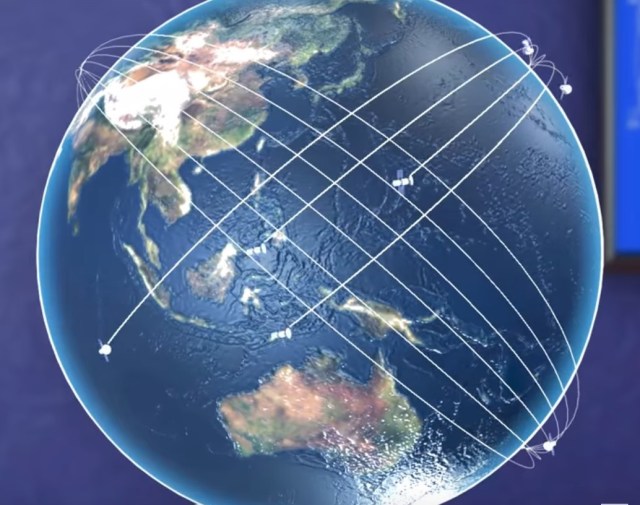
Boeing Satellite Systems International has signed up to build a fleet of seven satellites that will provide broadband internet connectivity from medium Earth orbit for SES’ O3b network.

O3b was set up a decade ago to provide internet access to the “Other 3 Billion” in the world who have been left out because they’re too remote or too poor to get connected. Last year, SES took over majority ownership of O3b Networks, which currently has 12 first-generation satellites in a 5,000-mile-high orbit.

Eight more of the first-generation satellites, also built by Boeing, are to be launched in 2018 and 2019 on Russian-built Soyuz rockets by the European Arianespace consortium. Boeing’s next-generation O3b mPower satellites are due to go into orbit starting in 2021.

Get the full story on GeekWire.

Categories
GeekWire

Kymeta’s pizza-box antennas pass tests at sea

Antenna replacement
An artist’s concept shows the bridge of the White Rose of Drachs before and after installation of Kymeta’s antennas. The antenna visible in the right image replaces the antenna domes visible in the left image. (Kymeta / e3 Illustration)

Kymeta Corp. — a company based in Redmond, Wash. and backed by Microsoft co-founder Bill Gates — says it’s conducted successful sea trials of its streamlined antenna system for broadband communications.

The trials were performed over the past several months in the Mediterranean Sea on a super-yacht known as the White Rose of Drachs, in cooperation with Kymeta’s Spain-based distribution partner, e3 Systems.

Word of the trials emerged today during the buildup to the Monaco Yacht Show, scheduled Sept. 27-30.

Get the full story on GeekWire.

Categories
GeekWire

Kymeta wins FCC’s OK for pizza-box antennas

Kymeta RAV4 SUV
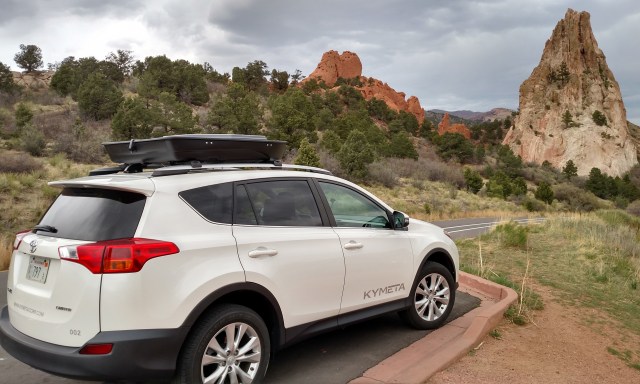
During an 8,000-mile test drive known as “Kytrek 2,” Kymeta demonstrated how its KyWay terminal could provide coast-to-coast satellite connectivity for a Toyota RAV4 SUV. (Kymeta Photo)

Kymeta Corp., the flat-panel antenna startup backed by Microsoft co-founder Bill Gates, has won key approvals from the Federal Communications Commission and its British counterpart for thousands of satellite antennas and the terminals to go with them.

Until now, the company has been providing its mTenna antennas and KyWay data terminals under the terms of special, temporary or experimental licenses, said Carl Novello, vice president of solutions for the Redmond, Wash.-based company.

“This is the big one that says, ‘Yup, you’re well on your way to commercialization,’” he told GeekWire today.

The FCC issued the blanket license on Aug. 24, authorizing 5,000 terminals for land mobile applications, 1,000 for maritime applications and 5,000 for fixed satellite service.

Get the full story on GeekWire.

Categories
GeekWire

BlackSky wins $16.4M Air Force contract

Image: BlackSky platform provides Aleppo data
BlackSky’s online imaging platform can link a satellite view of the Syrian city of Aleppo to real-time social media streams about the area to provide greater context. (Spaceflight Industries Graphic)

BlackSky, a division of Seattle-based Spaceflight Industries, has been awarded a two-year, $16.4 million cost-plus prime contract with the Air Force Research Laboratoryto deliver a cloud-based platform that can provide geospatial intelligence to government agencies.

The platform will provide on-demand analytics, collection and information services from global data sources, including satellite imagery, Spaceflight Industries said today in a news release.

Get the full story on GeekWire.

Categories
GeekWire

SpaceX launches Formosat-5 satellite

SpaceX launch
A SpaceX Falcon 9 rocket rises from Vandenberg Air Force Base in California. (SpaceX via YouTube)

SpaceX chalked up another successful satellite launch and booster landing today, putting Taiwan’s Formosat-5 Earth observation satellite into orbit in the process.

The company’s Falcon 9 rocket lifted off at 11:51 a.m. PT from California’s Vandenberg Air Force Base at the opening of a 44-minute launch window.

Minutes later, the rocket’s second stage separated to send the 1,050-pound Formosat-5 satellite into a nearly pole-to-pole orbit for Taiwan’s National Space Organization.

The satellite, a successor to Formosat-2, is designed to send down high-resolution Earth imagery for five years. Formosat-5 also carries a plasma sensor that will monitor the effect of space weather on Earth’s ionosphere.

Get the full story on GeekWire.

Categories
GeekWire

Virgin Orbit’s jet gets set to launch rockets

Cosmic Girl
Virgin Orbit’s modified Boeing 747 jet, known as Cosmic Girl, comes home to Long Beach, Calif., after going through a series of upgrades and tests. (Virgin Orbit Photo)

Virgin Orbit’s modified Boeing 747-400 jumbo jet, christened “Cosmic Girl,” is back at its home base in Long Beach, Calif., for preparations that will lead to its use as a launch platform for small satellites.

The jet returned to Long Beach on July 31 after going through a series of inspections and modifications conducted in collaboration with L3 Platform Integration and VT Aerospace, two of Virgin Orbit’s partners.

In a news release, Virgin Orbit said the Federal Aviation Administration has issued Cosmic Girl an experimental airworthiness certificate, opening the way for flight tests to begin at California’s Mojave Air and Space Port.

Get the full story on GeekWire.

Categories
GeekWire

SpaceX’s satellite plan runs into opposition

Satellite constellation
A SpaceX satellite coverage scheme described in a patent application envisions two sets of satellites orbiting in different inclinations at different altitudes. (PatentYogi via YouTube)

SpaceX’s plan to provide global broadband internet access using thousands of satellites in low-earth orbit has come under fire from competitors, including Boeing and OneWeb, according to Space Intel Report.

The argument is playing out in a series of filings with the Federal Communications Commission, focusing on SpaceX’s request for a temporary waiver from the FCC’s time limits for putting the satellite system into full operation.

The FCC would typically require the system to provide full coverage of U.S. territory within six years of a license being issued, but SpaceX says that’s not enough time to deploy the full 4,425-satellite constellation.

Instead, the company proposes launching the first 1,600 satellites in six years, which would leave the northernmost part of Alaska without coverage when the deadline hits. Full U.S. coverage would be provided after the six-year deadline, SpaceX says.

In their own filings, competitors including OneWeb, SES/O3b and Intelsat are urging the FCC not to waive the six-year requirement, Space Intel Report said.

Get the full story on GeekWire.

Categories
GeekWire

Third time’s the charm for SpaceX launch

SpaceX Falcon 9 launch
SpaceX’s Falcon 9 rocket rises from its Florida launch pad, carrying the Intelsat 35e satellite into orbit. (SpaceX via YouTube)

SpaceX finally launched the Intelsat 35e telecommunications satellite today atop a Falcon 9 rocket after two earlier attempts were aborted at T-minus-9 seconds.

Those two attempts, on July 2 and 3, were called off by SpaceX’s computer system when the parameters it had didn’t match up with what it expected. But when the engineers checked, it turned out there was nothing wrong with the rocket.

The computer’s go/no-go parameters were tweaked to be more forgiving, SpaceX launch commentator John Insprucker said today.

This time, the countdown ticked past the 9-second mark and the Falcon 9 rose smoothly from Launch Complex 39A at NASA’s Kennedy Space Center in Florida at 7:38 p.m. ET (4:38 p.m. PT).

Get the full story on GeekWire.

Categories
GeekWire

SpaceX aces a rocket doubleheader

SpaceX Falcon 9 ascent
SpaceX’s Falcon 9 rocket blasts its way into orbit. (SpaceX via YouTube)

Two days after launching a Falcon 9 rocket from Florida and landing it again, SpaceX accomplished the same feat in California, bringing 10 satellites to low Earth orbit for Iridium’s next-generation communications network.

Liftoff came at 1:25 p.m. PT from Vandenberg Air Force Base in California, and the booster landing on a drone ship in the Pacific Ocean took place a little less than eight minutes later. A little more than an hour after that, SpaceX confirmed that all 10 satellites were successfully deployed.

This was the second launch in SpaceX’s campaign to put 75 Iridium NEXT spacecraft into a constellation that’s designed to provide global high-speed satellite data transmission as well as aircraft tracking and surveillance.

The new constellation should be ready to replace Iridium’s existing network next year, representing one of the biggest satellite tech upgrades in history.

Get the full story on GeekWire.

Categories
GeekWire

Spaceflight salutes India’s 31-satellite launch

SpaceX’s Falcon 9 rocket wasn’t the only launch vehicle that took to the air today: India’s PSLV-C38 rocket sent an Earth-watching spacecraft called Cartosat-2E into a pole-to-pole orbit, along with 30 nanosatellites. Eight of those pint-sized satellites will be part of San Francisco-based Spire’s low-Earth-orbit constellation for tracking maritime traffic and monitoring the weather. Seattle-based Spaceflight played a role in getting Spire’s Lemur-2 satellites on the flight, and celebrated the successful liftoff from India’s Satish Dhawan Space Center.

Get the news brief on GeekWire.